In 1988, Edward James Olmos portrayed Jaime Escalante in a film that would come to epitomize the struggle of teaching in a world that didn’t trust teachers. At the end of the movie, an excited secretary asks whether he had heard the news that computers had been delivered to the school. His reply indicates that this kind of delivery will fail to cause the kind of paradigm shift that administration expects, and is as applicable today as it was thirty years ago.
Kaoticanomaly presents a series of often-recursive stories about administration’s addiction to the whimsical spending of taxpayer dollars on anything they consider to be the next panacea.
This is the latest iteration of… “Yep, that’ll do it .”
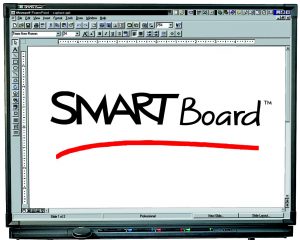
The education system is full of stories of wasting taxpayer dollars. And yet, for the majority of decisions in regards to spending, there is very little due-diligence from those making the decisions to spend the money under the guise of “students first” (administration’s favorite phrase when it comes to making decisions for, well, anything they believe will work best for teachers and students… with very little input, if any, from either).
Circa 2012, the new administration (superintendent, the assistant superintendents, and the board majority that gave them the positions) over at the district office decided that Smart Boards were to be installed in many of the classrooms throughout the district. Though there are different types of Smart Boards, a little research showed that the cost of each item, if you include the installation, wall mounts, and other paraphernalia that go along with the Smart Boards, ran at least $10k apiece.
I’ll be the first to admit that they were a nice addition to the classroom and did make it easier for the teachers to add visuals to their lessons through this technology. Some districts (because this was not limited to mine) elected for a mobile platform that allowed for the Smart Boards to be moved between a number of classrooms as there wasn’t enough money to purchase one for all teachers, but that isn’t the point—at least for this article.
Two years later, a new administration came in (after voters ousted all but one board member; this led to the removal of many administrative positions that were given to those who were part of the faction of the ousted board majority, but that’s a story unto itself) and decided that Smart Boards were not the way the district should be headed. This new superintendent and his handpicked inner circle decided to remove the majority of the two-year old Smart Boards and install new, eighty-inch touch-screen monitors at the front of each classroom. The total for these monitors—including installation and everything else that came along with them—was also about $10k apiece; the money for this expenditure was raised through yet another bond issuance.
Now, you might be thinking that the district would sell the Smart Boards that were taken down to recoup some of the money that was spent and maybe replace some books that are nearly 15 years of age or maybe some relic-like lab equipment, and you might one day be right. But as of now, there are at least 20 of these Smart Boards sitting in different portables and are turning into nothing more than expensive dust collectors. And as you know, the value of this technology on the secondary market will only decrease as time passes.
This type of decision making by your typical revolving-door administration (a specific, growing subset of administration, and not the good one), who only view the purchasing of technology as a photo op, and to pad their résumé, for their next job after they’ve completed their two-to-three year stint at their current site of employment, is the main reason that school districts are always running out of money and have to push one bond issuance after another on the local population, and also have to cut teachers or spending on students because there is simply never enough funding.
This was just one example of frivolous spending by people who, coincidentally, have the least interaction with the students who are constantly claiming that they are putting first. They have no trouble spending money on technology, multi-day conferences (administration attended at least three last year at a minimum cost of $15k each), and other experts in the latest educational acronym (one small group cost the district at least $25k this year), but have no trouble cutting teachers (our site alone lost two in the core subject areas) resulting in larger class sizes.
The cognitive dissonance when it comes to what administration believes is best for student learning is, of course, not measurable. Yet, they are the ones who ultimately have the final say as to how funds are spent and what they are spent on. They are the ones who are willing to spend hundreds of thousands of dollars on new monitors only two years after hundreds of thousands of dollars were spent on Smart Boards, and yet, can’t find any funds to replace fifteen-year old textbooks, or find a few hundred dollars to help fill in the gaps in funding that many clubs and sports are in need of every year.
Secretary: Mr. Escalante, Mr. Escalante, did you hear the news? We got the computers!
Jaime Escalante: Yep, that’ll do it.
(Stand and Deliver, 1988)