
One of administration’s, along with every other educational “expert’s”, favorite and overused catch phrases—believe me, there are many—over the last few years is: change the culture. It has been one of the most overused pieces of eduspeak at faculty meetings and professional developments for at least the last five years, and is attempting to ascend the ladder of educational jargon in an attempt to surpass the long-lasting leader: paradigm shift.
Asking how, precisely, the culture is being expected to change, and especially what any of their specific recommendations policies directives edicts are going to do in terms of measurable progress toward that murky goal, is simply the elephant that everyone pretends isn’t rolling its eyes along with every staff member who’s been watching the stalemate of a paradigm-volley for the past decade or so.
We are so often told by district leaders that this is what we as educators need to do with our students, never mind the fact that these are the people who have the least interaction with the students whose “culture” we are supposed to be changing. For those of us who have been doing this long enough and remain in the same district, we actually do see some cultural change throughout the years. However, when it comes to your revolving-door administrator, culture change is something that is expected to happen because of some directive given by the superintendent who heard something at some conference, or saw on some suggested YouTube video. Their conclusions is always that same: That simply implementing whatever it was they saw (without doing any of their own due diligence) at our school site will result in a similar outcome as it did in some school in some other state, with a completely different demographic.
I must give my past and present administrations some credit, as their policies have actually changed our school’s culture over the past 15 years. During those years, I have seen many policies accomplish a cultural change… just not as one might think. The thing about “culture” is that it tends to change from things like technological adaptation, access to information and media, and student attitudes toward how relevant their degree to an increasingly complex world will be when it comes to their (almost inevitable, really, provided they really want to) upcoming graduation.
And when it comes to changing the culture into one where that value has become so hyperinflated as to be almost completely worthless… well, they nailed it.
Since I started teaching at this site, the graduation rate as only gone in one direction: up. For those of you in education, or you’re just an outsider looking in, you are fully aware that what students know when they graduate has been going in the opposite direction. Students are now fully aware that they will be walking with the procession in June to the tune of Elgar’s Pomp and Circumstance (March Number 1) seemingly regardless of what they do for their four years of high school, provided they decided to make whatever fourth-quarter (of their fourth-year) turnaround necessary. This year’s group of graduating seniors—even the ones who still need a year’s worth of credits to graduate with just over two months left in the school year—know that someone will step in and bail them out in the last minute; this is usually a combination of counselors, parents, and administrators (if the teachers of these students are able to hold their ground against the harassment that will escalate as graduation approaches).
Even those of the freshmen class are fully aware of this before they start their first day of high school. Many of these students are also well below grade level as to what they know. I’m not talking about solving some abstract type of equation that administration expects them to be able to do by their junior year to do well on the SBAC; I’m talking about basic arithmetic that a fourth grader—at a district that doesn’t water down their curriculum to increase their promotion rate—should be able to do. The following are results of a quiz from an Algebra 1 class with 9th and 10th graders.


The results that follow come from a class of juniors and soon-to-be graduating seniors:


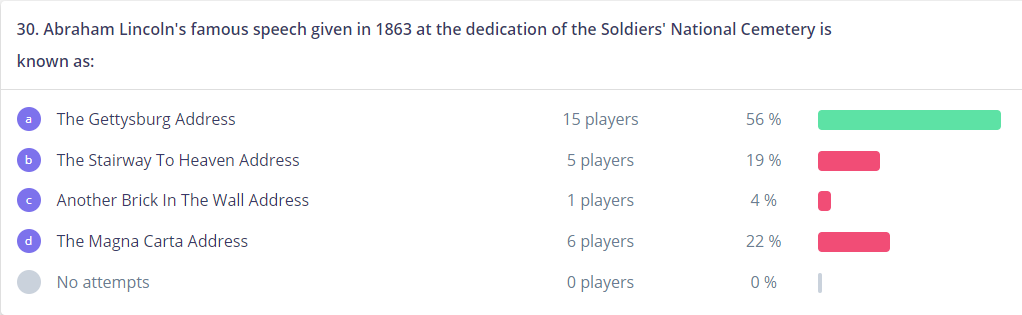
In my many years in the classroom, I have never seen this much apathy when it comes to a student failing a class as a result of literally doing nothing. Many show up to class and find some excuse for not doing any of their assigned work. They have heard through the grapevine that their diploma is guaranteed, and that they will get their last-minute credits through coercion of grade change or the ever growing, online credit-recovery classes.
In other words, the culture has changed; though no administrator will actually admit that this cultural change has anything to do with their last-minute antics to save a student who is in danger of not graduating.
As long as this placation of students by a revolving-door administration continues, more students will arrive at the next level (be it middle school to high school, or high school to college) having been nurtured by a system that has promoted them regardless as to whether or not they deserve to be promoted. This leaves the educator with a classroom full of these students, the near impossible task of changing the culture that has been created by those who are constantly telling us that we need to change the culture.